Kenya or Tanzania for your safari? An honest, side-by-side guide to the wildlife, the migration, the cost, and the crowds written by a Kenyan safari house that works across both.
It is the question almost every first-time safari traveller ends up asking: Kenya or Tanzania?
You have probably read a dozen articles that answer it with a shrug "both are wonderful, you can't go wrong!" and closed the tab no better informed than when you opened it. That is not this article.
We are going to give you an honest, specific comparison, including the things some operators would rather you didn't think about. And we will be transparent about our own position from the start: we are a Kenyan safari house, and we design journeys across both countries — because, as you are about to see, the border between them is largely an invention of mapmakers. The wildlife has never respected it, and neither should your safari.
Here is what actually separates the two, and how to choose.
The single most important thing to understand
Kenya and Tanzania do not have two separate safari ecosystems. They share one.
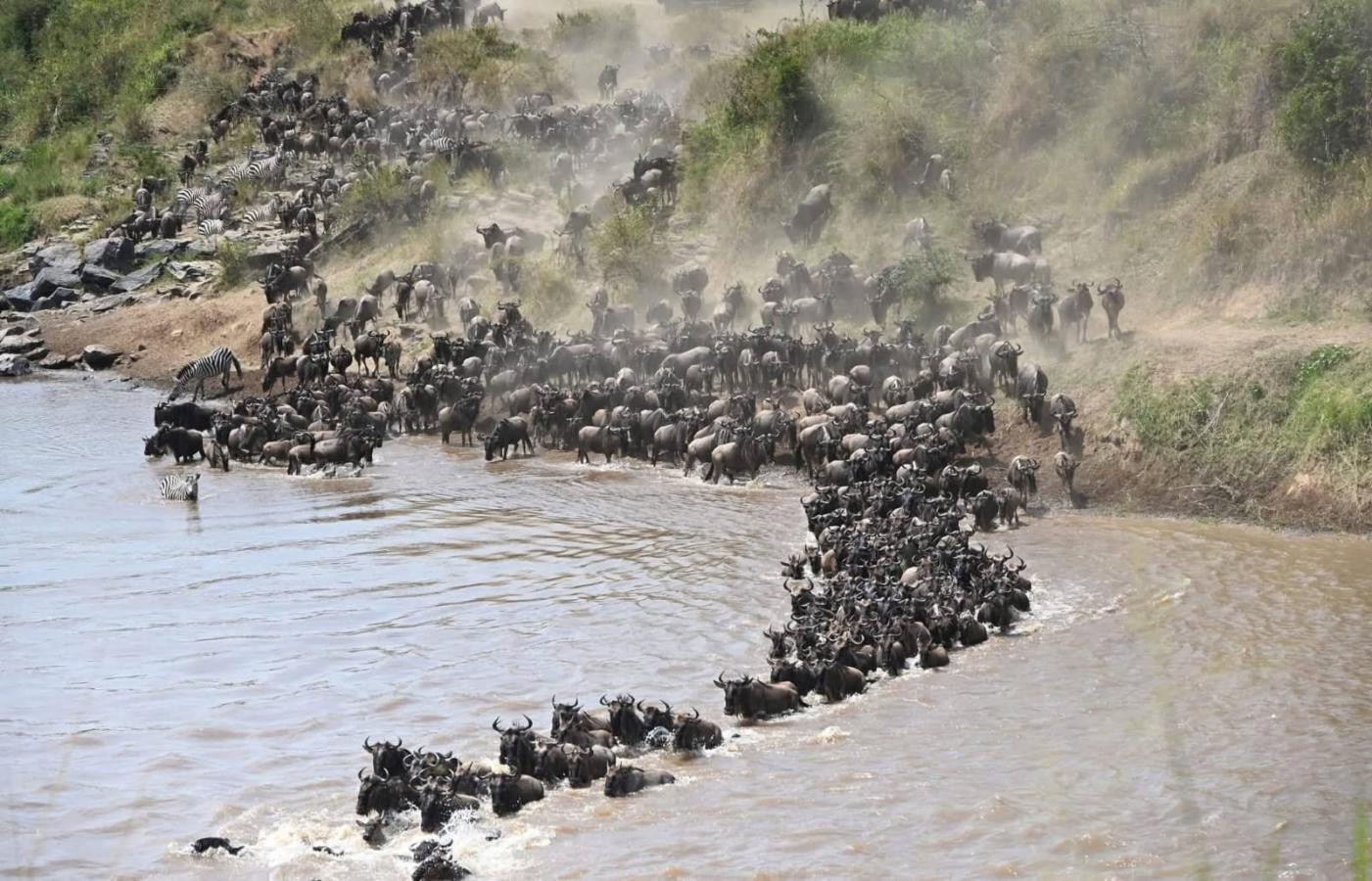
The Maasai Mara in Kenya and the Serengeti in Tanzania are the same vast plain, split by a political line drawn over a century ago. The Great Migration the largest movement of land mammals on Earth spends most of the year in Tanzania's Serengeti and crosses north into Kenya's Mara for a few dramatic months, then loops back. The wildebeest do not carry passports. They follow the rain and the grass.
This one fact reframes the entire "which country" question. You are not really choosing between two destinations. You are choosing where, and when, to stand in a single connected wilderness. Once you understand that, the decision becomes much clearer.
Kenya at a glance
Kenya is the birthplace of the safari the word itself is Swahili for "journey" and it remains East Africa's most visited destination. What defines a Kenyan safari:
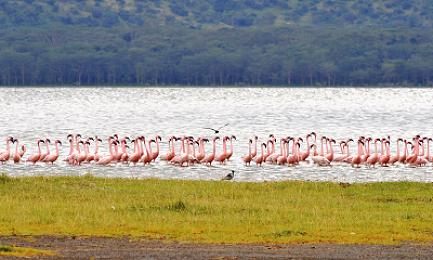
- Variety in a compact space. In a single trip you can combine the open plains of the Maasai Mara, the elephant herds of Amboseli beneath Mount Kilimanjaro, the flamingo lakes of the Rift Valley, and the stark northern frontier of Samburu each landscape distinct, and none more than a short flight apart.
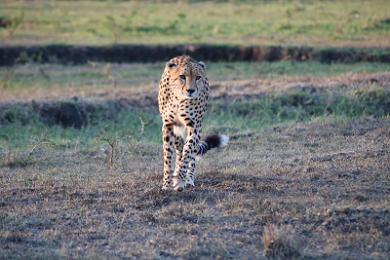
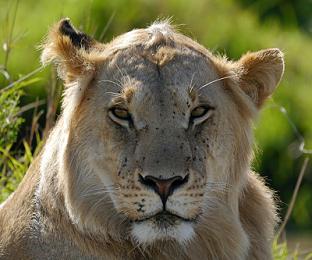
- The Mara's predator density. The Maasai Mara has one of the highest concentrations of big cats in Africa. If lions, leopards and cheetahs are what you came for, few places rival it.
- Community conservancies. Bordering the main reserve are private conservancies where vehicle numbers are strictly limited, night drives and walking safaris are permitted, and your visit directly funds local Maasai communities. This is where the most exclusive Kenyan safaris now happen away from the crowds.
- Ease and infrastructure. Kenya's safari circuit is well connected by light aircraft, making multi-park itineraries smooth even on shorter timeframes.
Tanzania at a glance
Tanzania is Kenya's great counterpart, home to some of the most famous names in safari:
- The scale of the Serengeti. The Serengeti is vast endless plains that stretch beyond the horizon. For sheer, uninterrupted wilderness, it is unmatched.
- The Ngorongoro Crater. A collapsed volcanic caldera that functions as a natural amphitheatre, holding an extraordinary density of wildlife within its walls. There is nowhere else quite like it.
- The heart of the migration. For much of the year, the great herds are in the Serengeti including the calving season in the southern plains, when hundreds of thousands of wildebeest give birth within a few weeks.
- Zanzibar. Off the Tanzanian coast lies the spice island of Zanzibar, making a safari-and-beach combination especially natural.
The honest comparison
Here is where most guides go quiet. Let's not.
Wildlife: Broadly comparable this is one ecosystem, after all. Kenya's Mara arguably edges ahead on big-cat density; Tanzania's Serengeti wins on sheer scale and on the calving season. Neither will disappoint.
The migration: This is entirely about timing, not country. The river crossings that most people picture thousands of wildebeest braving crocodile-filled waters happen mainly in Kenya's Mara around July to October. The calving happens in Tanzania's southern Serengeti around January to March. If you want a specific migration moment, the date determines the country, not the other way around. (More on this below it is where a data-driven approach genuinely changes your trip.)
Crowds: An honest point. Both the Mara and the Serengeti can get busy in peak season, with vehicles clustering at a good sighting. The way to avoid this is not choosing one country over the other it is choosing where within them to stay. Private conservancies in Kenya and low-density concessions in Tanzania are how discerning travellers escape the crowds. Where you stay matters far more than which country you pick.
Cost: Tanzania's park fees are generally higher than Kenya's, which can make a Tanzania safari more expensive at the top end. Kenya often offers more flexibility across price points, particularly through its conservancy model. That said, at the luxury level the difference is driven far more by your choice of camps and how you fly than by the country itself.
Getting around: Kenya's compact circuit and light-aircraft network make it slightly easier to combine several very different landscapes in a shorter trip. Tanzania rewards a slower pace across fewer, larger areas.
So which should you choose?
Here is our honest advice.
Choose Kenya if you want variety in one trip plains, elephants, lakes, and the dramatic north with the big cats of the Mara at the centre, and the option of exclusive, low-crowd conservancies.
Choose Tanzania if your priority is the raw scale of the Serengeti, the singular spectacle of the Ngorongoro Crater, or the calving season, and you want to pair it easily with Zanzibar.
But if what you truly want is the migration, or simply the best of this shared wilderness do both. This is not upselling; it is geography. The herds move between the two countries, and the only way to be certain of meeting them is to be willing to follow them across the line on the map. A journey that begins in the Serengeti and crosses into the Mara or the reverse follows the animals rather than the border, and sees the ecosystem as it actually is: whole.
Plan your Kenya–Tanzania migration journey
Where we come in - following the herds by satellite
Here is the part of this question that almost no one talks about, and it is the reason we exist.
The migration is not a fixed event on a calendar. It is a living, weather-driven movement. The herds go where the rain has fallen and the grass has greened and in a shifting climate, that timing moves from year to year. A printed brochure that says "the crossings happen in August" is describing an average, not a promise.
Our founder is a geospatial scientist, and we plan our migration journeys differently because of it. We track the greening of the Mara–Serengeti ecosystem using satellite vegetation data, so that we can position our travellers where the herds are actually heading not where last season's guidebook guessed they would be. When the question is "which country, and when?", we answer it not with folklore but with the current state of the land itself, read from space.
That is why, for us, "Kenya vs Tanzania" was never really a competition. It is one ecosystem, and our job is to read it and place you inside it at exactly the right moment
The bottom line
Both Kenya and Tanzania offer extraordinary safaris, and you genuinely cannot make a bad choice. Kenya gives you variety, big cats, and exclusive conservancies. Tanzania gives you scale, the Crater, and the calving. And the migration the reason many people come at all belongs to neither and both.
If you would like help deciding or you already suspect the honest answer for you is "both" we would be glad to design a journey that follows the herds across this shared wilderness, timed by the land itself.
Engolong Savannah Tours designs private, satellite-informed safaris across Kenya and Tanzania. "Engolong" means the sun in Maa, the language of the Maasai. Every journey begins with the sun.
Plan your Kenya–Tanzania migration journey