While the Maasai Mara gets the headlines, Kenya's northern frontier offers something rarer — remoteness, dramatic landscapes, and wildlife species found nowhere else on Earth. Samburu is for those who want their Africa genuinely wild.
Cross the equator heading north from Nairobi and the landscape transforms. The rolling green highlands give way to something older, drier, and more elemental — acacia scrubland, red laterite roads, and skies of impossible size. This is Samburu country, and it rewards those willing to venture beyond the well-worn southern circuit.
The Samburu Special Five
Samburu National Reserve shares a border with Buffalo Springs and Shaba — three reserves straddling the Ewaso Nyiro River that together form one of Kenya's most compelling wildlife destinations. What makes the northern reserves genuinely unique is the suite of arid-adapted species found here and nowhere else in Kenya.
- Reticulated Giraffe — the most beautiful of all giraffe subspecies, with a bold geometric pattern and a richly coloured coat. Samburu has one of the world's largest concentrations.
- Grevy's Zebra — larger, rounder-eared, and far more intricately striped than the common plains zebra. Critically endangered. Samburu is one of the last strongholds.
- Beisa Oryx — a masterwork of desert adaptation. Long, straight horns, a striking black-and-white face mask, and an ability to survive in conditions that would kill most animals.
- Gerenuk — the "giraffe-gazelle." Long neck, impossibly slender legs, and the extraordinary ability to stand upright on hind legs to browse foliage metres above the ground.
- Somali Ostrich — blue-necked (not the red-neck of the south) and found only in the horn of Africa region.
The River & Its Predators
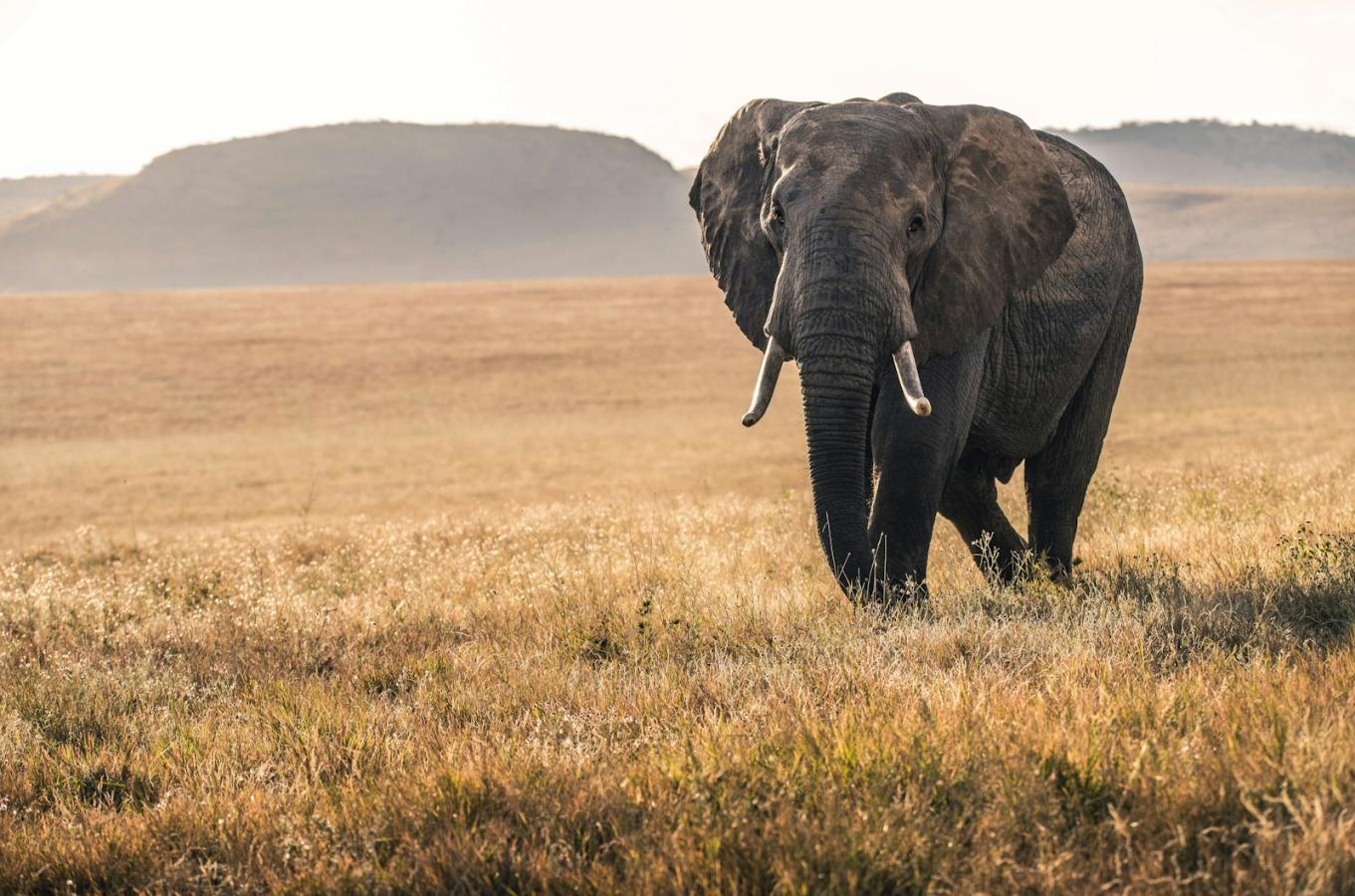
The Ewaso Nyiro (meaning "river of brown water" in Maa) is the lifeline of the north. In the dry season, every major predator and prey species is drawn to its banks. Elephant herds crash through the doum palms to drink. Crocodile bask on sandbars. And Samburu's resident lion prides — some of Kenya's largest — hunt along the river at dawn.
Combining with Ol Pejeta & Laikipia
Samburu pairs beautifully with Ol Pejeta Conservancy (3-4 hours south), home to the world's last two northern white rhinos, and the broader Laikipia plateau — a network of private conservancies offering walking safaris, night drives, and a level of exclusivity impossible in the national parks.
When to Visit
Samburu is excellent year-round, but the dry seasons (January–February and June–October) concentrate wildlife dramatically around the river. The short rains (November) are brief and bring beautiful light. Avoid April–May (long rains) as tracks become impassable.